Speaking Part 2
Part 2 Tips
Structure your Answer
Expand Vocabulary
Practice Timing
Learn topic-related words.
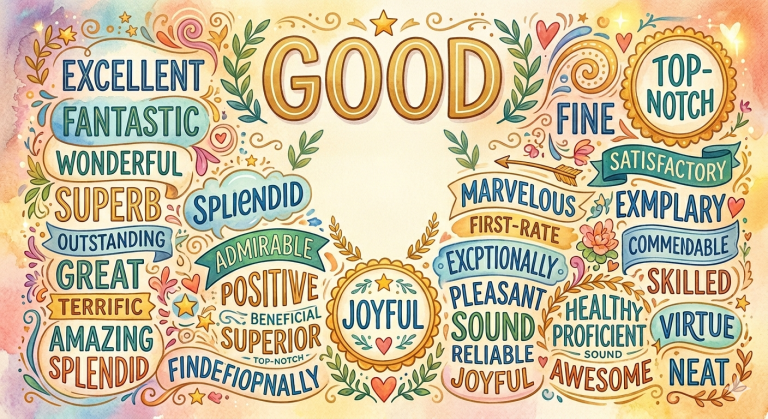
Use synonyms and paraphrase to avoid repetition.
Aim for 1-2 minutes; going over or under can affect your score.
Around 1 minute 30 is a good target.
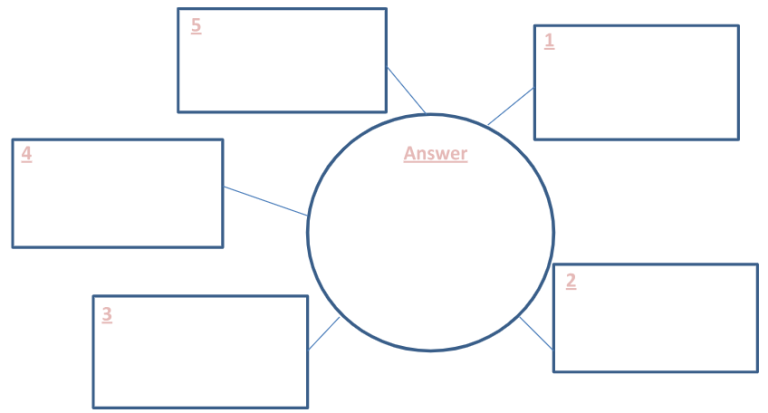
Use the 1-minute preparation time to plan your talk with an introduction, main points, and academic vocabulary you want to include.

Speaking Part 2 -
Sample Questions and Model Responses
Task Card 1:
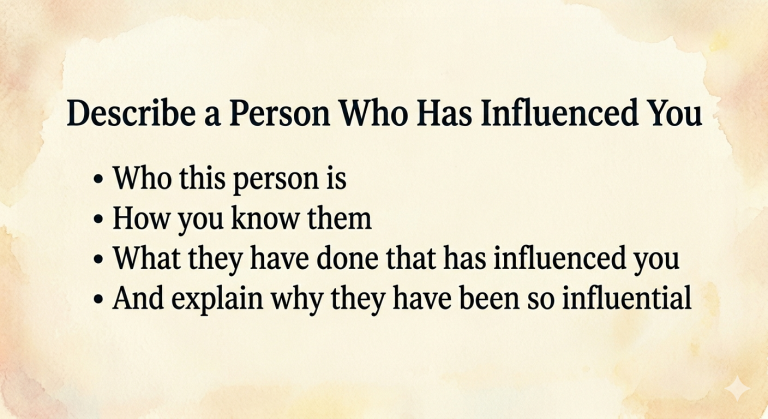
Influential Person
I’d like to talk about my high school math teacher, Mr. Chen, who had a huge impact on my life—much more than I could have imagined back then. I first met him during my sophomore year, at a time when I was really struggling to wrap my head around abstract math. From that point on, he completely changed my perspective on learning and how I tackle challenges in general.
What really set him apart wasn’t just his expert knowledge, but his genuine commitment to making sure every student actually understood the 'why' behind the numbers. He had this way of using unconventional teaching methods, like bringing in real-world examples to make those difficult concepts feel tangible and accessible. Instead of just memorizing formulas, we were actually solving practical problems.
Throughout my time in his class, especially when I hit a wall with my studies, he’d always remind me that 'Rome wasn’t built in a day.' That really stuck with me and helped me develop a sense of perseverance and resilience. His influence was instrumental in helping me build an analytical mindset, which has definitely been a game-changer for me in competitive exams and my professional life since then.
More than anything, what I admire most is that he didn’t just care about our grades. He managed to spark a genuine passion in us for learning, showing us that education is a lifelong journey rather than just a means to an end.
Below are sample questions and Band 8+ answers for IELTS Speaking Part 2,
with detailed explanations of why they achieve high scores.
Why this response achieves Band 8+:
Phrases like "wrap my head around," "hit a wall," and "game-changer" show the examiner you can use English idiomatically, which is a requirement for the higher bands.
The response uses a mix of tenses (Past Simple, Past Continuous, Present Perfect) and structures (relative clauses like "which has definitely been...") without sounding like a rehearsed script.
It uses more natural transitions like "More than anything," and "From that point on," which help the speech flow smoothly.
Terms like "analytical mindset," "tangible," and "instrumental" provide the necessary academic weight for a C1 level without making it sound unnatural.
Academic Vocabulary & Phrasal Verbs
- Wrap my head around - To find a way to understand something difficult or complicated.
- Set someone apart - To make someone better than or different from others.
- Tangible - Clear and definite; real enough to be easily seen or felt.
- Hit a wall - To reach a point where you cannot continue or make progress.
- Instrumental - Being very important in helping something to happen.
- Means to an end - Something done only because it will help you achieve something else.
Task Card 2:
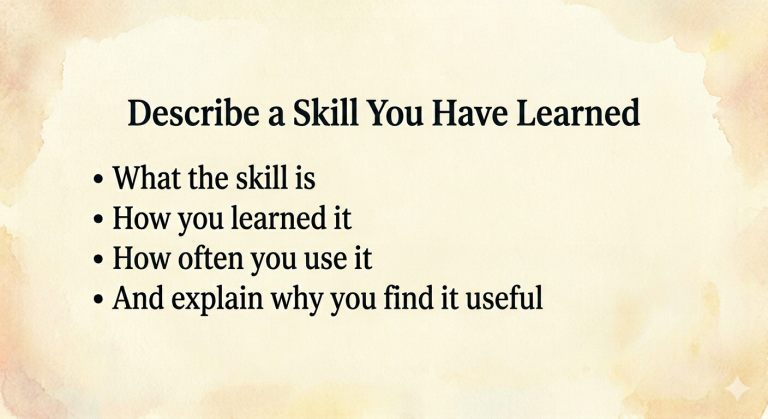
New Skill
I’d like to talk about how I learned digital photography, which has turned into a great creative outlet for me and actually opened up some unexpected doors in my career. I picked up this skill during a gap year after finishing my degree, mostly through a mix of online courses and a lot of trial and error with my own camera.
Instead of just sticking to boring textbooks, I really dived into the deep end to figure out how things like aperture, shutter speed, and ISO actually work together. At first, honestly, my photos were pretty amateur and full of technical mistakes. But by sticking with it and paying close attention to how I edited my shots, I slowly started to develop a knack for composition and a better eye for what makes a photo look professional.
Nowadays, I’ve managed to turn photography into a side hustle, and I’ve even landed some freelance gigs for corporate clients and private events. What I find most rewarding about it, though, is that it’s literally allowed me to 'see the world through a different lens.' It forces me to notice small details and unique perspectives that most people would probably just walk right past.
Beyond the extra income and the professional side of things, photography lets me capture meaningful moments and tell stories that might otherwise be forgotten. It’s a skill that’s both practical and incredibly fulfilling.
Why this response achieves Band 8+:
Using phrases like "side hustle" and "landed some gigs" shows you understand modern, native-level professional vocabulary.
Idioms such as "trial and error," "dived into the deep end," and "sticking with it" demonstrate that you can express complex processes using natural English.
The response sounds like a conversation with an educated peer. It avoids overly academic words which can sound a bit forced in a spoken test, and replaces them with more effective descriptors like "amateur" or "paying close attention."
Instead of formal transitions like "consequently" or "furthermore," it uses "honestly," "nowadays," and "more than anything," which maintain the flow of speech more effectively.
Academic Vocabulary & Phrasal Verbs
- Creative outlet - A way of expressing your feelings or using your imagination.
- Trial and error - A way of learning something by trying different methods and seeing what works.
- Dived into the deep end - To start doing something new or difficult without much experience.
- Knack for (something) - A natural skill or ability to do something well.
- Side hustle - A piece of work or a job that you get paid for in addition to your main job.
- Capture a moment - To succeed in representing or recording a feeling or a specific event.
Task Card 3:
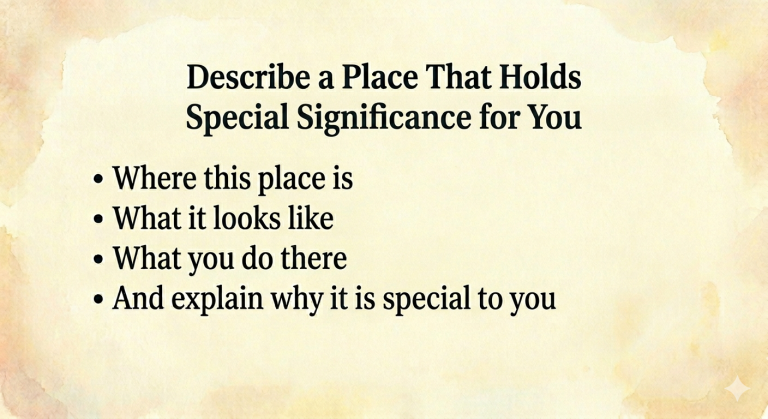
A Special Place
Let me tell you about the reading room in my university library. It’s essentially become my personal sanctuary—a place where I can escape the hustle and bustle of campus life and all the pressure of my studies.
The architecture is actually quite stunning. It has these massive vaulted ceilings and huge windows that let in a lot of natural light, which makes the whole place feel really peaceful and yet somehow keeps you focused. It’s that perfect balance of being quiet enough to think but also feeling like an inspiring place to get work done.
It’s packed with thousands of books across almost every subject you can imagine. I usually head there when I need to get stuck into some serious research or cram for exams, but over time, I’ve realized it’s about more than just studying.
Beyond just being a place to work, it’s been a bit of a game-changer for my personal growth. I’ve spent countless hours there grappling with difficult ideas or just finding some mental clarity when I’m feeling overwhelmed. I think the real significance of the library is how it’s provided a sense of emotional solace during tough times.
There’s something about the quiet atmosphere and seeing everyone else buried in their books that’s really motivating. It’s a constant reminder of the transformative power of education, and it definitely helps me stay on track with my own goals.
Why this response achieves Band 8+:
Using phrases like "personal sanctuary," "mental clarity," and "emotional solace" shows you have a sophisticated vocabulary for discussing feelings and environments.
Idioms such as "get stuck into" (to start doing something with energy) and "stay on track" (to continue as planned) make the speech sound more natural and less like a memorized essay.
The use of "Beyond just being..." and "There’s something about..." allows for smooth transitions between describing the physical space and explaining its emotional importance.
The response uses complex structures like "quiet enough to think but also..." and "reminds me of... which definitely helps..." without sounding forced or overly formal.
Academic Vocabulary & Phrasal Verbs
- Personal sanctuary - A private place where you feel safe and peaceful.
- Hustle and bustle - A large amount of activity and work, usually in a noisy or busy setting.
- Get stuck into - To start doing something with a lot of enthusiasm and determination.
- Grappling with - Trying hard to understand or deal with a difficult idea or problem.
- Emotional solace - Help and comfort when you are feeling sad or worried.
- Stay on track - To continue doing the right thing in order to achieve a particular result.
Task Card 4:
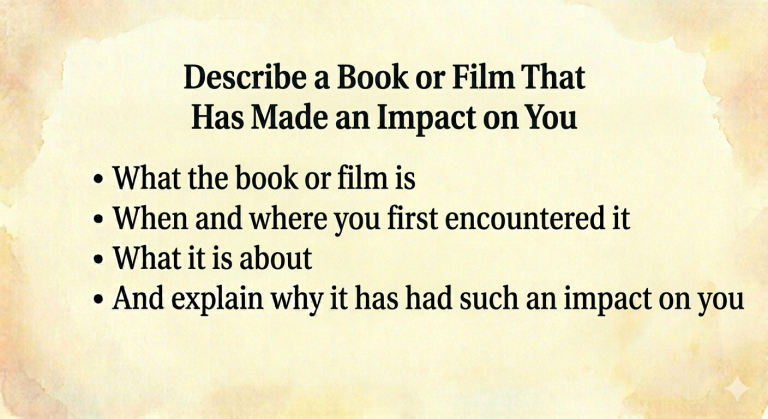
Impactful Book or Movie
The movie I’d like to talk about is 'Life is Beautiful,' a famous Italian masterpiece directed by Roberto Benigni. I first saw it during a film course at university, and it completely changed how I look at storytelling. The story is set during World War II and follows a Jewish family going through a truly harrowing experience in a concentration camp. But remarkably, it’s actually a very uplifting story about hope and resilience.
What really stands out to me is the way the father tries to protect his young son from the horrors around them by pretending the whole thing is just a giant, elaborate game. It’s incredible how the director manages to weave humor into such a tragic setting. It’s a really delicate balance, but it works—it’s both heartbreaking and beautiful at the same time.
The father’s determination to keep his son’s spirits up is a perfect example of what it means to 'keep your chin up' in the face of total disaster. It really showed me that resilience isn't just about surviving physically; it’s about preserving your humanity and staying optimistic, even when things seem impossible.
Ultimately, this film had a huge impact on my worldview. Now, whenever I’m going through a rough patch or facing a setback, I think back to the message of this movie. It’s a constant reminder that the human spirit is incredibly tough and that our perspective can help us get through almost anything.
Why this response achieves Band 8+:
Instead of formal transitions like "Consequently and meaningfully" for more natural spoken phrases like "Ultimately" or "What really stands out to me is..."
It incorporates powerful, high-level vocabulary like "harrowing," "weave," and "resilience" but uses them in a way that feels unforced.
Using the idiom "keep your chin up" or the phrase "going through a rough patch" demonstrates the kind of natural, flexible language use examiners look for at the higher bands.
Phrases like "huge impact," "delicate balance," and "constant reminder" show that you know which words naturally fit together in English.
Academic Vocabulary & Phrasal Verbs
- Stand out - To be much better than other similar things or people; to be very noticeable.
- Weave (something) into - To combine different elements together to create a single story or idea.
- Keep your chin up - An idiom meaning to stay positive and hopeful during a difficult situation.
- Going through a rough patch - To experience a period of time that is particularly difficult or unsuccessful.
- Preserving your humanity - Maintaining your values, kindness, and dignity despite terrible circumstances.