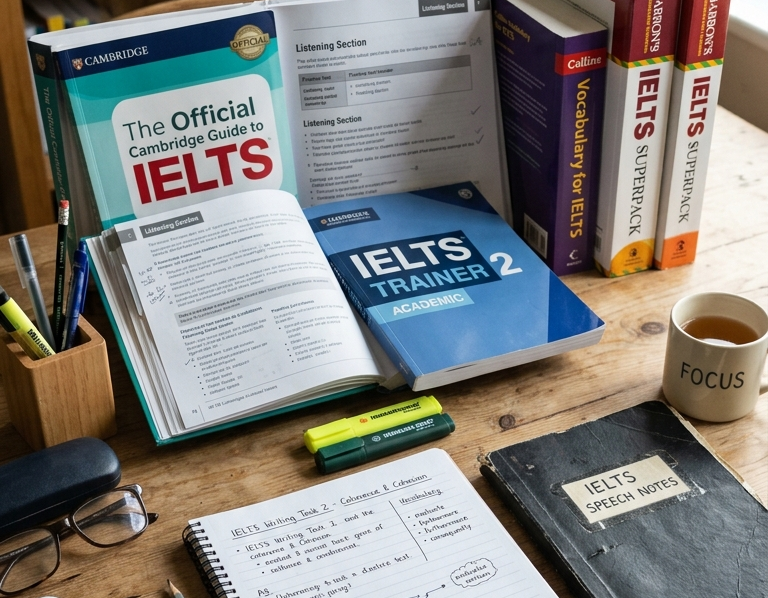
What is IELTS?
The International English Language Testing System (IELTS) is a standardized global exam designed to measure the English language proficiency of non-native speakers.
It assesses four core communication skills—listening, reading, writing, and speaking.
It is for for individuals seeking international education, professional migration, or global employment.
IELTS Advantages
Discover below why you should take the IELTS examination.
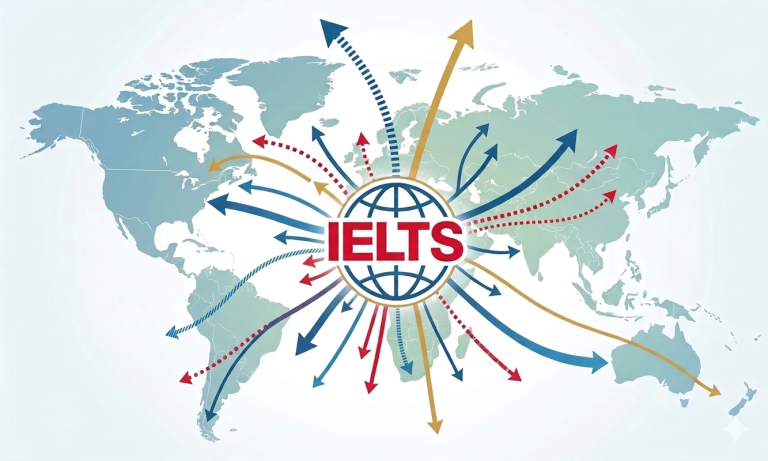
Global Recognition and Acceptance
IELTS is recognized by more than 12,000 organizations in over 140 countries.
This includes elite universities, professional registration bodies, multinational corporations, and government immigration agencies worldwide, making it a highly versatile credential.

Real-World Communication
The exam is designed to reflect how you will use English in everyday academic and professional settings.
Preparing for the test naturally improves your practical communication skills.
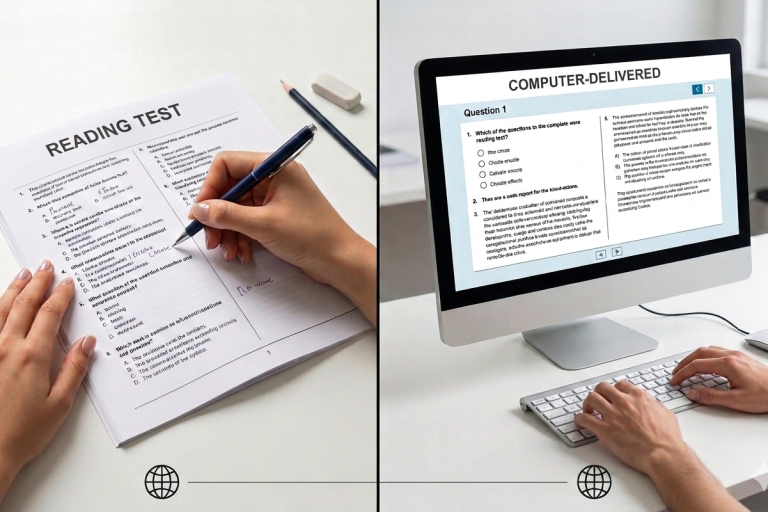
Flexible Options
With thousands of test centers globally, you can choose between a paper-based or a computer-delivered format depending on your personal writing and testing preferences.

Academic or General
IELTS offers two distinct paths: Academic (for higher education or professional registration)
General Training (for migration, secondary education, or work experience).
This allows you to take a test that directly matches your specific purpose.
This website focuses on the Academic version.
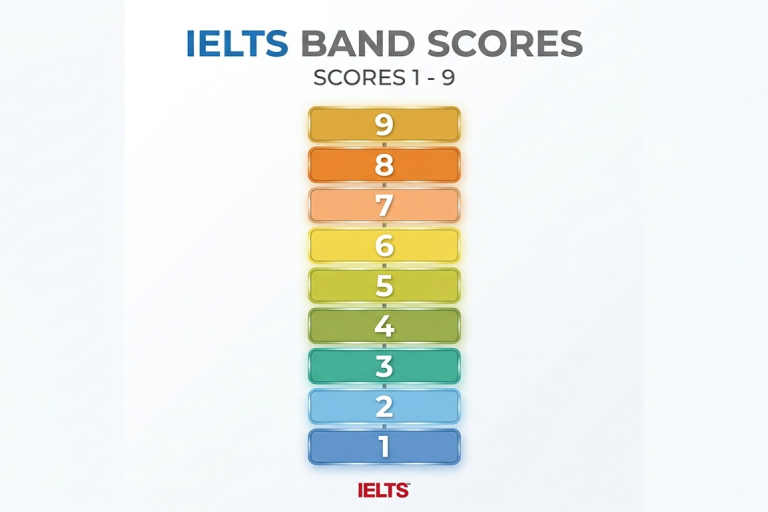
Objective Standards
The IELTS 9-band scoring system provides a clear, reliable breakdown of your proficiency across all four linguistic skills.
This objective framework gives you—and potential employers or universities—an accurate map of your exact language strengths.

Quick Results
Results are delivered rapidly, often within 3 to 5 days for the computer-delivered version.
The paper-based exam may take a few days longer.
IELTS or TOEFL?
Features a mix of question types like short answer, gap-fills, and multiple-choice.
It uses various English accents (UK, Australian, US) and emphasises real-world communication.
Almost entirely multiple-choice.
It focuses heavily on academic North American English, often requiring you to synthesize information (e.g., reading a text and listening to a lecture, then writing about both).
Conducted as a live, face-to-face interview with a real human examiner.
This can feel more natural and authentic. It is likely how you learned.
Completed entirely on a computer.
You speak into a microphone, and your responses are recorded and graded later.
Available in both paper-based and computer-based formats at official test centers.
Primarily a computer-based test (internet-based test, or iBT) taken at a center or at home.
Choose IELTS if...
- You prefer interacting with a real person rather than talking to a computer screen for the speaking section.
- You do well with diverse question types (like filling in the blanks or matching headings) and prefer a mix of global English accents.
- Your target institutions are in the UK, Australia, New Zealand, or Canada (though it is widely accepted in the US as well).
Choose TOEFL if:
- You are highly comfortable with standard multiple-choice formats and enjoy typing all of your responses.
- You have strong note-taking skills and excel at "integrated tasks"—meaning you can easily combine reading, listening, and writing simultaneously.
- Your primary goal is attending a university in the United States, where the TOEFL's academic, North American focus is deeply rooted.
Exam
Format
Speaking
Test Delivery
A popular alternative to IELTS is TOEFL. Below is a brief comparison of both options.