Agree or Disagree
Agree or Disagree Top Tips
This Task 2 essay type has many common, and avoidable!, mistakes. Read on for our advice.
Pick a Clear Side
Your line of argument must continue from start to finish.
Your real opinion does not matter! Please remember this!
The best option is to be ambivalent. This means you sit on the fence.
Staying in the middle provides the perfect structure for your balanced essay: one paragraph agrees, the other disagrees.
You also won't run out of things to say!
4-Paragraph Structure
When you choose to sit on the fence, the structure is easy:
- Introduction - paraphrase the title + thesis statement
- Body #1 - One side of the argument
- Body #2 - Other side of the argument
- Conclusion - Restate your thesis statement + summarise main points or implications for society/future.
TEEL Body Paragraphs
Topic sentence: Start with a clear main idea. Don't be specific.
"First of all, alternative energy reduces greenhouse gas emissions."
Explanation: Explain why or how this happens.
"By replacing coal and gas with solar power, factories can operate without releasing carbon into the atmosphere."
Example: Provide a specific illustration or data point.
"For instance, Sweden has cut its carbon footprint significantly by relying heavily on renewable energy sources."
Link: Tie it back to your overall line of argument.
"Therefore, transitioning to clean energy is a vital step in combatting global climate change."
Avoid Personal Pronouns
To sound academic and authoritative, hide your personal pronouns in the body paragraphs.
Save your personal pronouns (I, my, me) strictly for your Introduction and Conclusion where you state your final position.
Tip: Avoid using You in the body paragraphs too. It can also lead to misused pronouns.
Write about the specific group of people instead of saying 'they' or 'people', for instance: students, teenagers, workers etc.
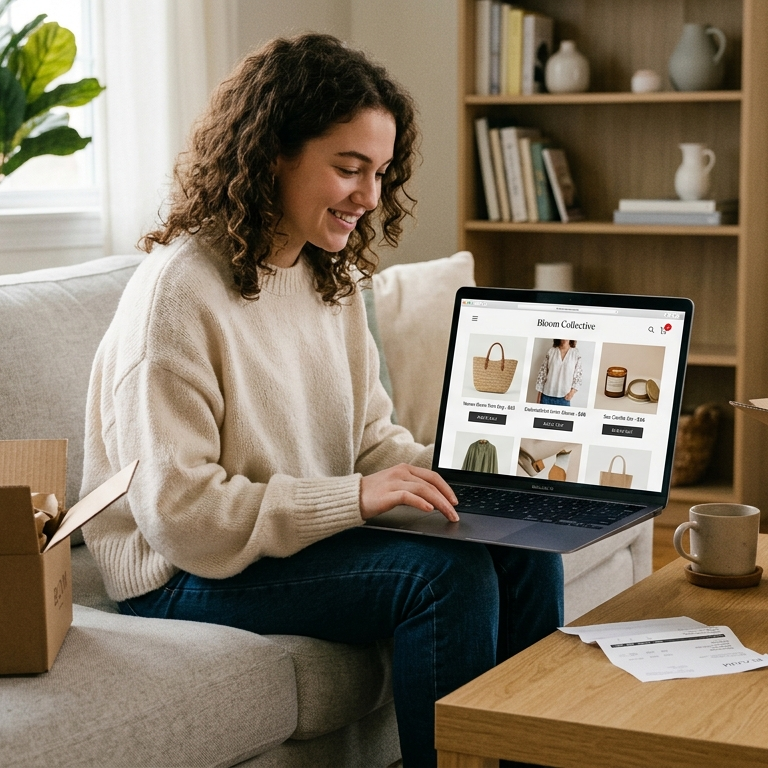
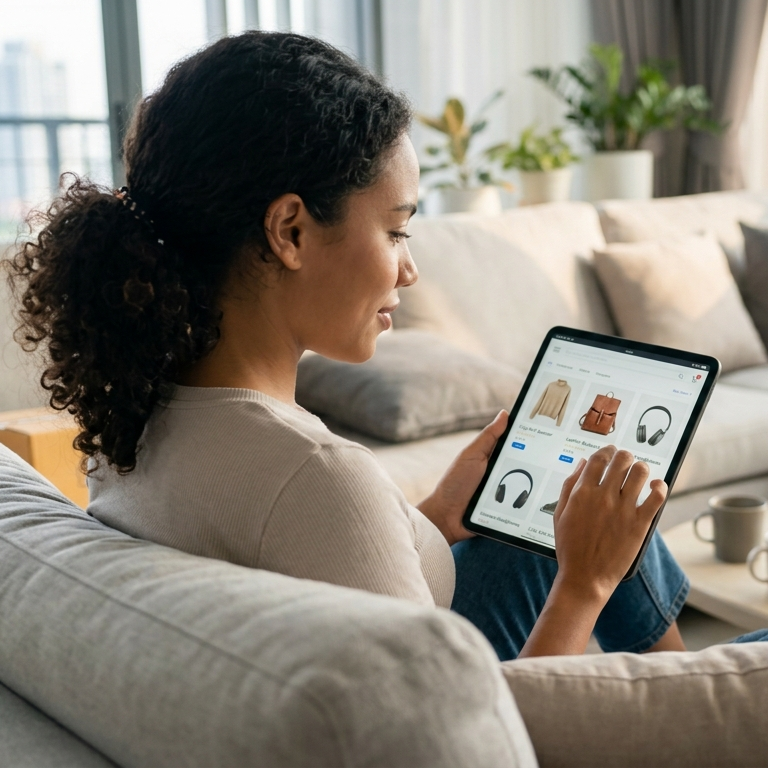
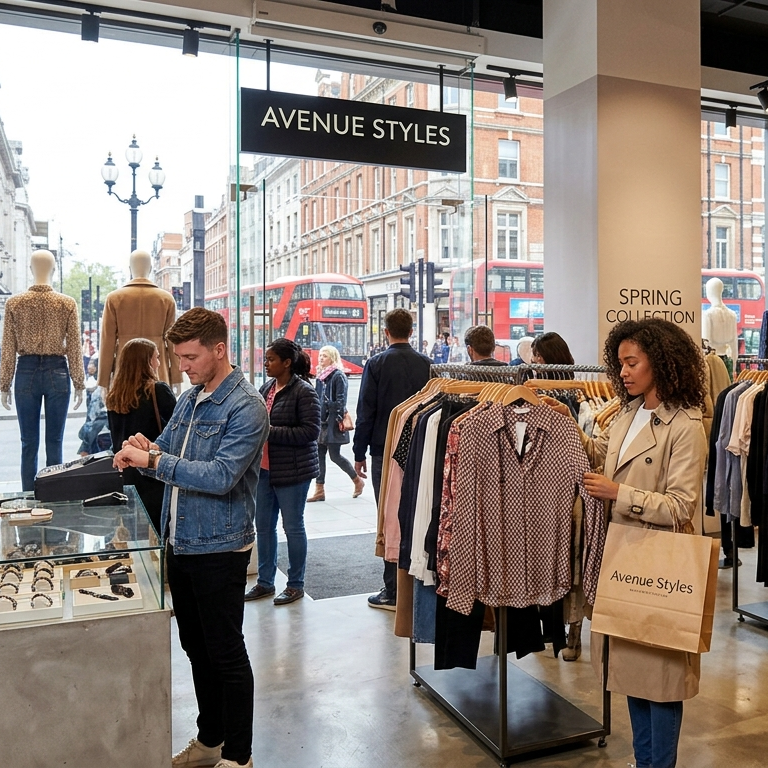
Some people believe that shopping will be done completely online in the future.
To what extent do you agree?
Neutral Standpoint
While many experts predict that physical retail will eventually be entirely replaced by digital commerce, I believe that the future marketplace will instead be a balanced hybrid model. Although online commerce offers unmatched efficiency, the enduring psychological need for social interaction and physical product engagement means that brick-and-mortar storefronts will never disappear completely.
First of all, the convenience and vast selection of digital retail make it the preferred choice for routine, everyday purchases. Online platforms allow consumers to bypass geographic boundaries and time constraints, letting them buy household essentials or electronics instantly from anywhere. For instance, the exponential growth of subscription-based home deliveries has made standard supermarket trips largely redundant for busy professionals. Therefore, because digital supply chains excel at fulfilling functional consumer needs with minimal effort, online shopping will undoubtedly dominate the transactional side of retail.
However, physical stores offer an immersive sensory experience and a venue for social gathering that digital screens simply cannot replicate. High-street shopping is often a leisure activity where consumers seek instant gratification, tactile product validation, and community connection. For example, flagship experiential stores in major cities now combine retail with cafes, galleries, and interactive workshops to create a destination rather than just a point of sale. Consequently, since virtual platforms cannot genuinely fulfill these human desires for tactile experience and community, physical marketplaces will remain essential.
In conclusion, I firmly maintain a neutral stance, believing that online and physical retail will coexist rather than one entirely eliminating the other. If consumer behavior were to shift completely toward one single medium, society would suffer either from a loss of structural efficiency or from a profound lack of real-world human connection.
Word Count: 272
Band Score: 9
Completely Agree
Many experts predict that physical retail will eventually be entirely replaced by digital commerce. I completely agree with this forecast, as the unparalleled convenience of online shopping and continuous advancements in digital security make a total transition inevitable.
First of all, the unmatched convenience of digital retail is driving the permanent decline of brick-and-mortar storefronts. Online platforms allow consumers to browse and purchase goods globally from their own homes, entirely removing the need to travel, park, or wait in lines. For instance, major e-commerce platforms like Amazon now offer predictive logistics and same-day delivery, making traditional supermarket trips obsolete for busy urban residents. Therefore, as these digital supply chains become even more efficient, physical shopping will lose any remaining practical value for consumers.
Furthermore, rapid innovations in virtual technology and secure payment gateways are erasing the traditional advantages of physical stores. In the past, people preferred in-person shopping to inspect product quality or try on clothes before purchasing. However, modern e-commerce utilizes advanced augmented reality tools that let buyers virtually visualize items in their homes or try on garments using precise digital avatars. Consequently, because these technological solutions offer a risk-free and highly accurate simulation of the physical marketplace, the necessity for physical retail spaces will completely disappear.
In conclusion, I strongly believe that digital commerce will entirely substitute traditional shopping due to its superior convenience and evolving interactive technologies. If physical storefronts were to vanish entirely, society would need to repurpose vast urban commercial areas into community hubs or green residential zones.
Word Count: 257
Band Score: 9
Many experts predict that physical retail will eventually be entirely replaced by digital commerce. I wholeheartedly disagree with this forecast, as virtual platforms can neither replicate the indispensable sensory experience of in-person shopping nor replace the vital social functions that brick-and-mortar storefronts provide.
First of all, physical marketplaces provide an immersive sensory validation that virtual environments simply cannot simulate. Consumers frequently require a tactile connection with merchandise—such as assessing the texture of fabrics, testing the weight of electronics, or trying on footwear—before committing to a financial purchase. For instance, high-end fashion boutiques and luxury car dealerships continue to see record foot traffic because their clientele demands physical inspection and immediate product gratification. Therefore, because digital screens can never satisfy this fundamental human desire for tangible certainty, brick-and-mortar retail spaces will always remain necessary.
Furthermore, traditional shopping serves as a vital leisure activity and a cornerstone of community interaction. Retail centers are not merely points of transaction; rather, they function as vibrant social hubs where citizens gather, socialize, and seek real-world connection away from digital devices. For example, modern shopping centers heavily incorporate experiential spaces like cinemas, indoor parks, and dining districts to transform shopping into a holistic, shared experience. Resultantly, since purely online commerce reduces shopping to a sterile, isolated digital chore, society will continue to actively protect physical retail environments.
In conclusion, I resolutely believe that physical retail will never be completely superseded because of the unique tactile and communal benefits it yields. If digital commerce were to eliminate brick-and-mortar stores entirely, our communities would experience a profound decline in authentic human interaction and social well-being.
Word Count: 285
Band Score: 9
Completely Disagree
Task Achievement
Stance:
The essay takes an uncompromising, one-sided position ("I completely agree with this forecast") and maintains it flawlessly throughout.
Development:
Body Paragraph 1 focuses strictly on the convenience factor (using Amazon's predictive logistics as evidence). Body Paragraph 2 tackles the elimination of physical store benefits via technology (using augmented reality and avatars as evidence).
Coherence and Cohesion
Progression:
The flow moves logically from the functional/logistical reasons to buy online (Paragraph 1) to the technological solutions solving the physical shop problem (Paragraph 2).
Cohesive Devices:
Transitions are used with high accuracy to show cause, contrast, and effect to guide the reader effortlessly.
Lexical Resource
Topic Vocabulary:
Deploys highly sophisticated tech-commerce terms: digital commerce, predictive logistics, same-day delivery, digital supply chains, virtual technology, augmented reality, digital avatars.
Precision:
Words like unparalleled, obsolete, and simulation are used in their exact proper academic contexts.
Grammar
Structures:
Features advanced syntax, such as modifying clauses: "...making traditional supermarket trips obsolete for busy urban residents."
Targeted 2nd Conditional:
The conclusion uses a 2nd conditional to highlight the writer's mastery of advanced grammatical sentences.
Task Achievement
Stance:
Fulfills a very difficult task by presenting a perfectly balanced, 50/50 hybrid model perspective without sounding indecisive or contradicting itself.
Development:
The essay gives equal weight and depth to both sides. Body Paragraph 1 fully validates the transactional side of e-commerce, while Body Paragraph 2 fully validates the psychological and sensory necessity of physical stores.
Coherence and Cohesion
Progression:
The transition between the two paragraphs is anchored by a strong contrast marker ("However"), signaling to the examiner a deliberate pivot to the opposing view promised in the thesis statement.
Paragraph Unity:
Each body paragraph acts as a self-contained unit defending its respective side of the hybrid model.
Lexical Resource
Topic Vocabulary:
Features excellent retail-specific vocabulary: balanced hybrid model, routine purchases, geographic boundaries, subscription-based home deliveries, immersive sensory experience, tactile product validation, flagship experiential stores.
Paraphrasing:
Avoids repetition by shifting between functional consumer needs and human desires for tactile experience.
Grammar
Structures:
Effectively utilizes concession structures to balance ideas: "While many experts predict... I believe that..." and "Although online commerce offers..."
Accuracy:
From simple to complex sentences, the essay delivers a full range of accurately written sentences and paragraphs.
Task Achievement
Stance:
The introductory thesis is completely ironclad ("I completely disagree with this forecast..."), setting up an absolute refutation of online shopping.
Development:
Body Paragraph 1 addresses the tangible/sensory reasons humans need physical stores (high-end fashion and luxury cars). Body Paragraph 2 addresses the social/communal reasons (shopping centers as vibrant social hubs).
Coherence and Cohesion
Progression:
The essay moves seamlessly from an individual human need (sensory validation) to a wider societal need (community interaction), creating a natural expansion of scale.
Signposting:
Advanced internal linking devices are used elegantly: "...rather, they function as..." and "...since purely online commerce reduces..."
Lexical Resource
Topic Vocabulary:
Uses exceptional descriptive collocations: immersive sensory validation, tactile connection with merchandise, financial purchase, immediate product gratification, points of transaction, holistic shared experience, completely superseded.
Variety:
Effectively replaces the word "shopping" with highly precise alternatives.
Grammar
Structures:
Showcases complex correlative structures: "...can neither replicate the indispensable sensory experience... nor replace the vital social functions..."
Accuracy:
There are no incorrectly written sentences in the essay with a variety of structures present throughout.
Important to note!
The examiner does not care what you really think.
It is a test of your English ability only.
Hence, although you need good ideas, the task is assessing your writing only.